
- Main
- News
- A Practical Event on “SDG 1: No Poverty and Students’ Financial Responsibility” Held at Al-Farabi Kazakh National University
A Practical Event on “SDG 1: No Poverty and Students’ Financial Responsibility” Held at Al-Farabi Kazakh National University
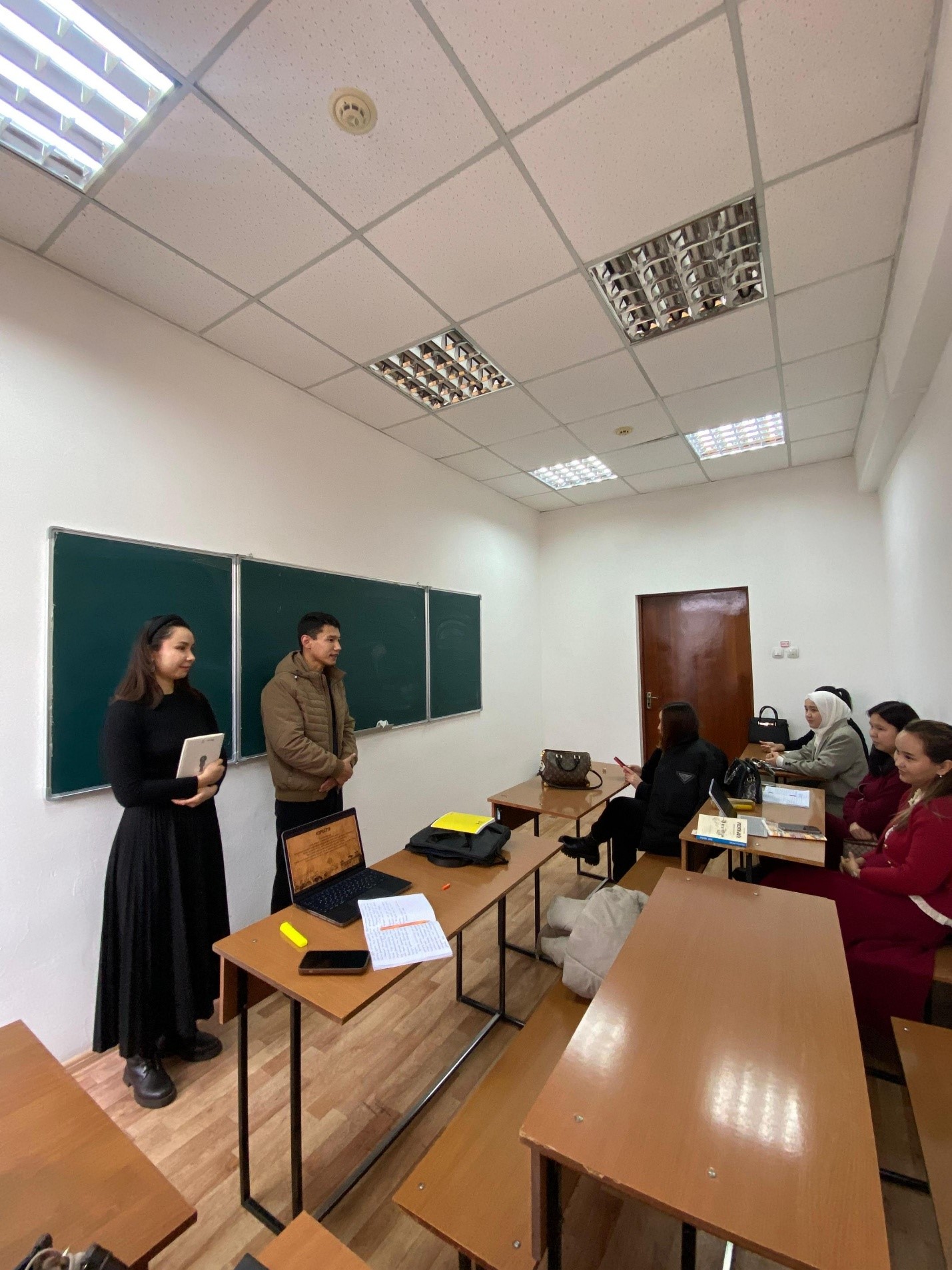
Report on the Practical Event Conducted Among 3rd-Year Islamic Studies Students of Al-Farabi Kazakh National University on the Topic
“SDG-1: No Poverty and Students’ Financial Responsibility”
Currently, sustainable development issues represent one of the key priorities of the global community. In 2015, the United Nations adopted the Sustainable Development Goals (SDGs), among which Goal 1 – No Poverty – is considered one of the fundamental factors in ensuring social stability. In this regard, fostering financial literacy among students, developing responsibility, and encouraging a conscious attitude toward the future are especially relevant.
For this purpose, a short practical event titled “SDG-1: No Poverty and Students’ Financial Responsibility” was organized among third-year students majoring in Islamic Studies at Al-Farabi Kazakh National University. The main objective of the event was to help students understand poverty not only as an economic issue but also as a complex phenomenon connected with personal responsibility, financial literacy, and life strategy.
The practical session was conducted in an interactive format. First, students were asked to recall their personal expenses over the past week. Participants identified main expense categories such as food, beverages, transportation, and small daily costs. This exercise enabled them to analyze their financial behavior. During the discussion, most students acknowledged that the majority of their spending was directed toward short-term needs, while investments in education, professional skills, and personal development were minimal.
At the next stage, students were introduced to three key components of financial behavior: earning capacity, effective financial management, and income growth skills. During the discussion, participants tried to identify which area represented their weakest point. Some mentioned limited income opportunities, while others noted insufficient financial planning skills. Thus, it was concluded that poverty is related not only to low income but also to a lack of financial planning and skills.
In the final part of the event, students were asked a reflective question: if their current lifestyle does not change, what might their socio-economic situation look like in a few years? This question encouraged participants to reflect on personal responsibility and life strategy. The discussion also emphasized the long-term social and economic impact of systematic investment in education and professional skills.
Overall, the practical session enabled students to connect the meaning of the Sustainable Development Goals with their personal life experiences. Particular attention was paid to financial literacy, professional development, and future planning. Such short interactive activities enhance students’ social responsibility and help them integrate sustainable development principles into everyday life.
In conclusion, SDG-1 is not only a macroeconomic objective but is also closely linked to each individual’s financial culture, level of education, and life strategy. Regular implementation of similar practical activities among students contributes to the formation of socially active and economically stable individuals.
Other news


