
- Main
- AL-FARABI NEWS LETTERS
- Project Title: Development of Polymer Self-Healing Coatings Containing Natural Corrosion Inhibitors for Steel Protection
Project Title: Development of Polymer Self-Healing Coatings Containing Natural Corrosion Inhibitors for Steel Protection
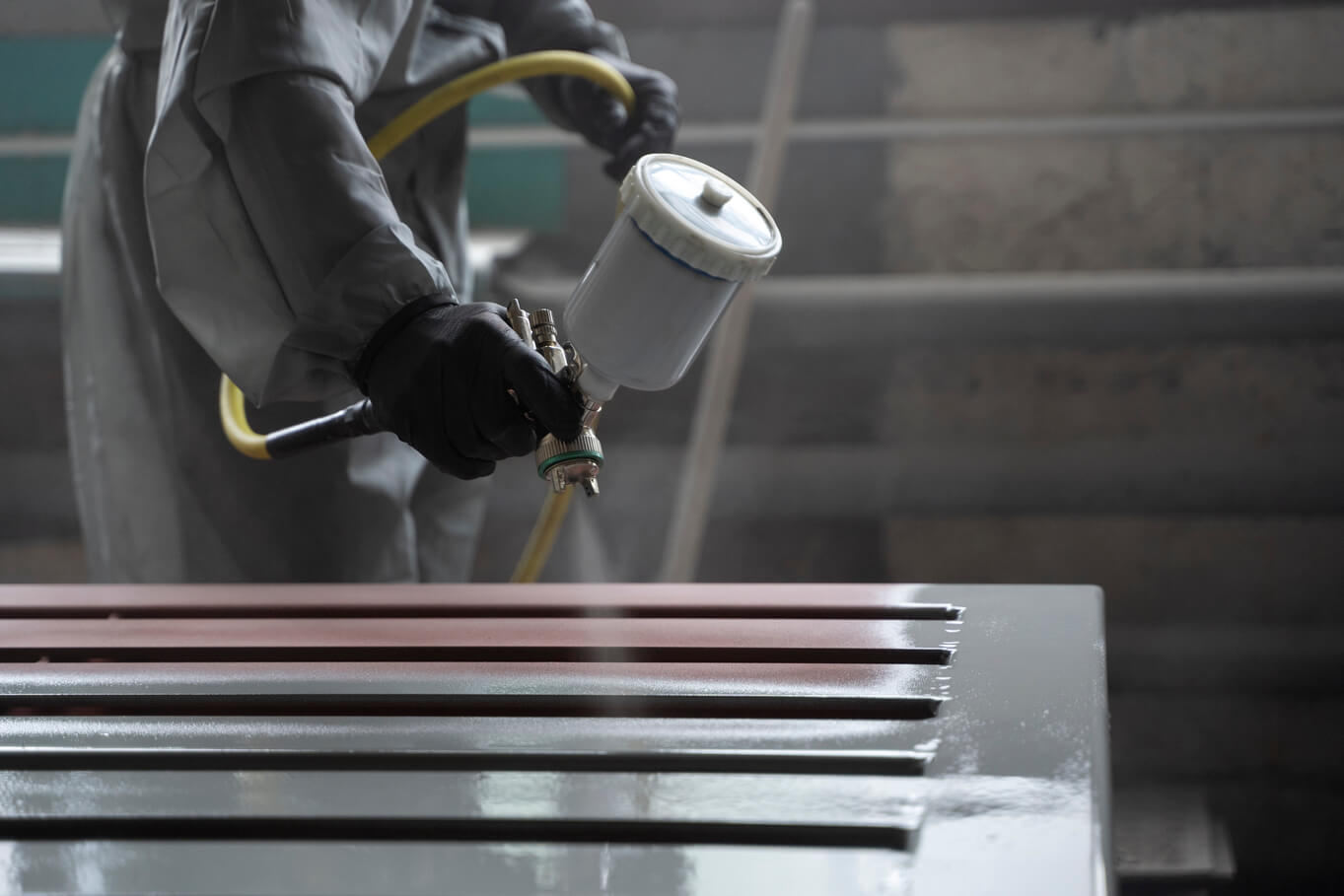
Corrosion of metallic materials remains one of the most significant challenges in modern materials science and industrial engineering. The degradation of metal structures under aggressive environmental conditions leads to substantial economic losses, reduced operational safety, and increased maintenance costs. Therefore, the development of environmentally friendly and highly efficient protective coatings is an important scientific direction. This research is being conducted at Al-Farabi Kazakh National University, where scientists are working on innovative functional materials for corrosion protection.
The main objective of the project is the development of nanocomposite self-healing coatings based on electrically conductive polymers, including polyaniline, polypyrrole, and their derivatives, for the corrosion protection of steel surfaces. To enhance the functional properties of the coatings, two-dimensional materials such as graphene, carbon nanotubes, molybdenum disulfide, and metal oxides are used. The incorporation of these components improves electrical conductivity, mechanical strength, and active surface area of the coating.
Special attention is given to the application of natural corrosion inhibitors. Natural inhibitors are biodegradable substances derived from plant or biological sources that reduce environmental impact. These inhibitors can be encapsulated inside nanotubes or nano-containers and gradually released when exposed to aggressive environments, forming a protective film on the metal surface. This mechanism enables the self-healing effect of the coating and extends its service life.
The research consists of several stages. The first stage involves the synthesis of natural corrosion inhibitors using extraction methods from plant materials, ultrasonic treatment, and chemical modification of active components. The obtained compounds are analyzed in terms of structural and functional characteristics.
In the next stage, nanocomposite materials based on conducting polymers and two-dimensional structures are synthesized. The main method used for polymer nanocomposite preparation is chemical oxidative polymerization, which ensures uniform distribution of components within the polymer matrix and improves structural stability.
Application of protective coatings is carried out on steel surfaces using different technological methods such as spraying, immersion coating, and electrochemical deposition. The coating thickness is controlled according to ASTM standards. Carbon steel and stainless steel samples are used as substrates.
To evaluate the corrosion resistance of the coatings, modern electrochemical analysis methods are applied. Electrochemical impedance spectroscopy, polarization curve analysis, and linear polarization resistance methods are used to determine corrosion rate and electrochemical stability.
Accelerated corrosion testing is conducted in a salt spray chamber that simulates marine atmospheric conditions. This method helps assess the durability of coatings under harsh environmental exposure.
Surface morphology and structural properties of materials are studied using scanning electron microscopy (SEM), X-ray photoelectron spectroscopy (XPS), atomic force microscopy (AFM), and transmission electron microscopy (TEM). These techniques allow detailed investigation of nanostructure, chemical composition, and surface topology of the coatings.
Numerical modeling of corrosion processes is performed using software packages such as COMSOL Multiphysics, Materials Studio, Corrosion Analyzer, and Digimat. Computational simulation enables prediction of coating behavior under different environmental and operational conditions.
The scientific novelty of the project lies in the combined use of two-dimensional materials and natural corrosion inhibitors to develop intelligent self-healing coatings. The proposed approach improves corrosion protection efficiency while reducing environmental impact. The obtained results may be applied in industry to increase the durability of metal structures.
This project contributes to the development of scientific and technological potential in Kazakhstan. Research in the field of intelligent anticorrosion materials supports the creation of new protective technologies, enhances the competitiveness of domestic industry, and promotes the development of environmentally safe materials.
The research results are planned to be published in peer-reviewed scientific journals. Cooperation with the scientific community and training of young specialists in materials science and nanotechnology are also important components of the project. Scientists of Al-Farabi Kazakh National University are conducting research in this direction, contributing to the advancement of modern science.
In the future, the developed technology has potential for commercialization and industrial implementation. The creation of intelligent self-healing coatings may reduce maintenance costs of metal structures, improve operational safety, and decrease environmental risks.
Overall, the project represents a modern scientific study aimed at developing innovative corrosion-resistant materials. It integrates chemistry, materials science, nanotechnology, and engineering approaches to solve the important practical problem of metal corrosion protection.
Other news


