Nauryz as a SDG platform: KazNU combines science, tradition, and international dialogue
On April 11, 2026, Al-Farabi KazNU hosted a large-scale cultural event to celebrate Nauryz. The festive program, organized by the entire university community, took place at Al-Farabi Square and brought together students, faculty, and staff, serving as a shining example of preserving national traditions and strengthening corporate culture.
The celebration began promptly at 12:00 PM with fanfares setting the festive atmosphere. The concert program, which lasted one hour and 10 minutes, featured more than ten multi-genre performances, attended by approximately 700 people. The event opened with the choreographic composition "Koktem Shuagy," performed by 62 students. The audience was then treated to a large-scale vocal and choreographic performance, "Nauryz Kerueni," featuring 200 faculty members.
Zhanseit Tuimebayev, Chairman of the Board – Rector of the University, delivered a congratulatory speech, emphasizing the significance of Nauryz as a symbol of renewal, unity, and sustainable development. In his address, he also noted the recent meeting of the university community with the President of the Republic of Kazakhstan, Kassym-Jomart Tokayev, emphasizing the priority role of science and education in the country's development. The Rector emphasized that, in the face of global challenges, scientific research, innovation, and interdisciplinary approaches are becoming key factors in the sustainable development and competitiveness of the state.
The event also included an awards ceremony for the Almaty City Akimat staff and the winners of the university-wide "Taza Campus" competition.

The musical portion of the program featured a performance by the "Zamandastar" ensemble, performing compositions in Kazakh, Russian, and English. Particularly popular were performances such as "Nauryz-Duman," "Khalyk Aenderinen Poppuri," and the theatrical composition "Ulttyk Kiim – Ult Ainasy," accompanied by a national fashion show.

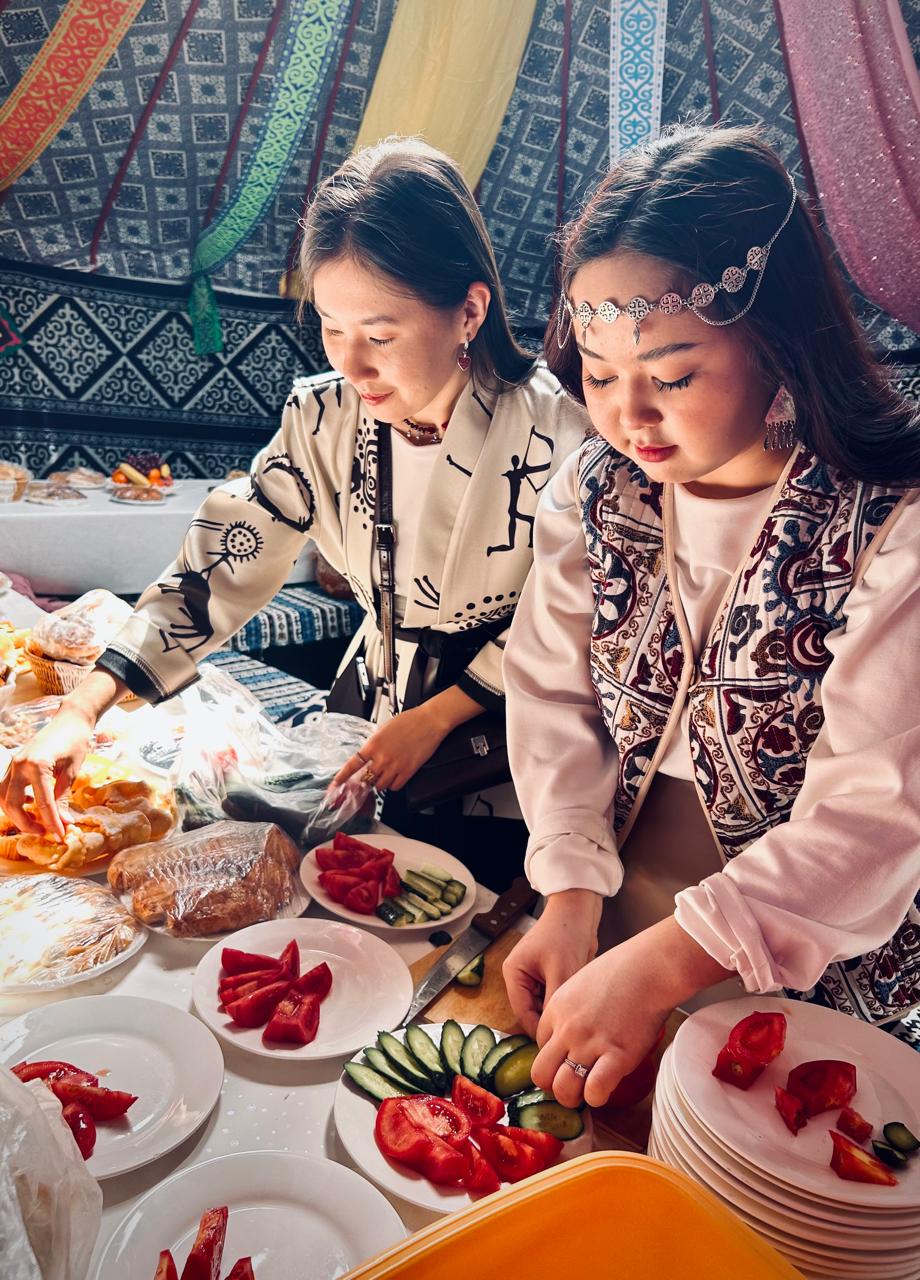
A special place in the celebration was played by the themed yurt "Zhasyl El Auyly," which became a symbol of interfaculty collaboration and the university's environmental agenda. This venue united the efforts of the Faculty of Biology and Biotechnology and the Faculty of Geography and Nature Management, demonstrating the synergy of research areas in the field of sustainable development and rational environmental management.
Celebrating Nauryz at the university also reflects the profound connection between science and cultural heritage. In the context of the development of fields such as genetics and molecular biology, the idea of preserving and transmitting the "code" of the nation – its traditions, values, and historical memory – takes on particular significance. Just as genetic information is passed down from generation to generation, a people's cultural traditions serve as the foundation of a society's identity and resilience.
A key part of the program was the poetic composition "Ush alyptyn amanaty," reflecting the spiritual heritage of Kazakh culture. The concert concluded with vibrant performances of "Bіr shaңyraқ astynda" and "Men senі suyemіn, Қазақстан!", symbolizing the unity of the people and love for the Motherland.
The event generated great interest and attracted a large number of international guests, highlighting the university's international status and its openness to intercultural dialogue. In a broader context, Nauryz serves as a platform for social consolidation, strengthening interethnic harmony, and fostering shared values that unite different generations and cultures.
It should be noted that Al-Farabi KazNU is a leading research university in the country, actively developing priority scientific areas, including molecular biology, genetics, biotechnology, and sustainable environmental management. The university integrates educational, scientific, and innovative activities, ensuring the training of highly qualified specialists and the development of Kazakhstan's scientific potential.
Holding the celebration in this format reflects the university's commitment to ESG (Environmental, Social, and Governance) principles, particularly social interaction, inclusiveness, and sustainable development. The initiative also aligns with several UN Sustainable Development Goals, including SDG 4 "Quality Education," SDG 11 "Sustainable Cities and Communities," and SDG 17 "Partnerships for Sustainable Development," demonstrating the integration of science, traditions, and international cooperation into the educational environment. Such events help strengthen cultural identity, foster intergenerational dialogue, and foster sustainable development values, uniting tradition and modernity in a unified educational space.
Department of Molecular Biology and Genetics
Other news


