
A Guest Lecture with a Customs Control Expert Was Held at Al-Farabi KazNU
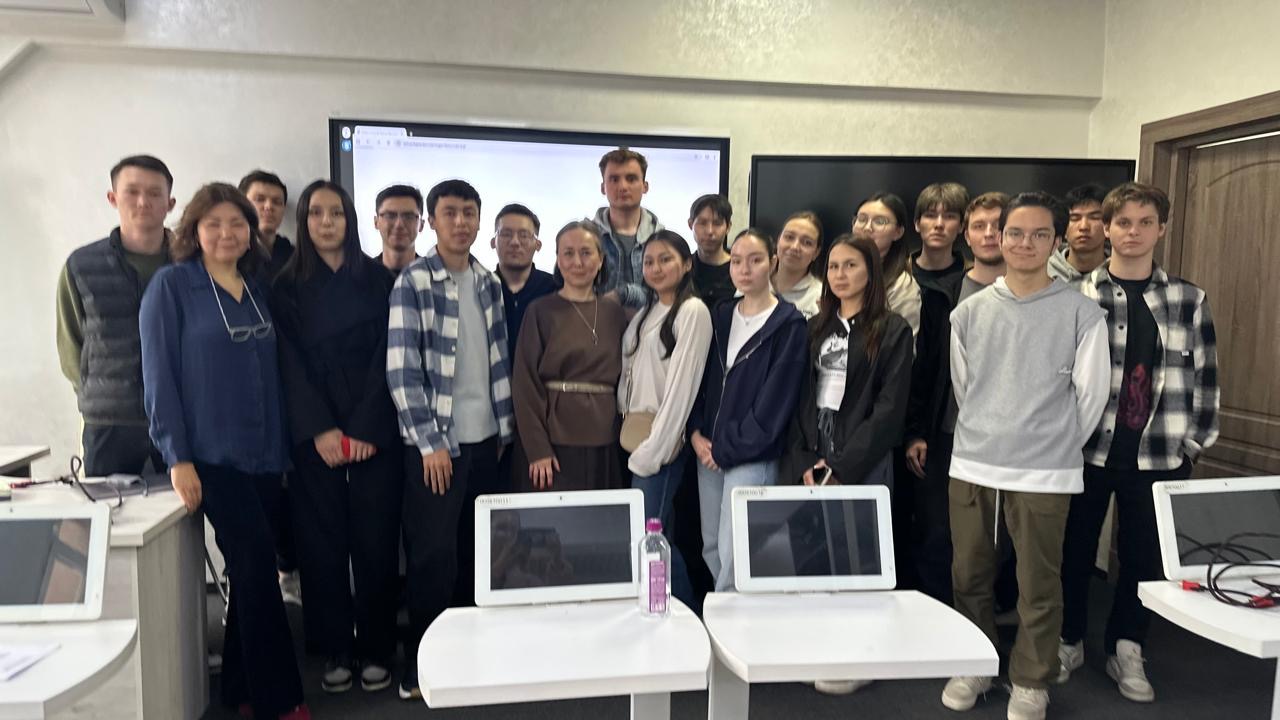
A meeting with Zhanar Boranbay, a customs control expert and specialist at KaR-Tel LLP (Beeline™), was held at Al-Farabi Kazakh National University. The event was organized within the framework of practice-oriented education aimed at expanding students’ professional competencies and strengthening the university’s cooperation with industry representatives. Zhanar Boranbay has substantial practical experience in the field of customs control and import support, including the import of telecommunications equipment and materials.
During the meeting, the expert presented practical experience in customs support of foreign economic activity. Special attention was given to the preparation and processing of customs documentation, coordination of the import of specific and special categories of goods, as well as compliance with tariff and non-tariff regulation requirements. Separate attention was also paid to the stages of customs operations in the international supply chain, including preparation for foreign economic activity, товар classification under the HS code system, selection of Incoterms, transit procedures, placement at temporary storage warehouses, customs control procedures, and release of goods. An important thematic block covered issues related to certification, permits, and the requirements of state authorities.
The analysis of the main customs risks in international activity aroused great interest among students. During the lecture, legal, financial, time-related, commercial, and reputational risks arising in the customs clearance process were discussed. The expert emphasized that mistakes in product classification, customs valuation, invoice and packing list preparation, as well as non-compliance with legal requirements, may lead to delivery delays, additional charges, fines, penalties, and other negative consequences for participants in foreign economic activity. Particular attention was also given to the importance of accurate documentation, timely data coordination, and the professional responsibility of a logistics specialist in the international supply chain.
The discussion also addressed current challenges of customs logistics, including digitalization of processes, differences in customs practices across countries, and the impact of the human factor on supply chain stability. For students, the meeting became an important opportunity to deepen their knowledge in customs regulation, international logistics, and risk management, as well as to better understand employers’ practical expectations of future specialists.
Such events contribute to improving the quality of student training, strengthening their professional orientation, and building a sustainable connection between theoretical education and practice. The university will continue to involve practicing experts in the educational process in order to improve the training of qualified professionals.
The event also corresponds to the UN Sustainable Development Goals (SDGs), in particular SDG 4: Quality Education, as it expands students’ educational opportunities through interaction with practicing professionals. In addition, the meeting is related to SDG 8: Decent Work and Economic Growth, since it is aimed at developing professional competencies demanded in the modern labor market. The event also reflects the provisions of SDG 9: Industry, Innovation and Infrastructure, considering the connection between customs control, international logistics, and digitalization processes with the development of a modern economic and infrastructural environment.
Other news


