- Main
- News
- Digital Literacy as a Foundation for a Safe Life: A Social Initiative by Doctoral Students
Digital Literacy as a Foundation for a Safe Life: A Social Initiative by Doctoral Students
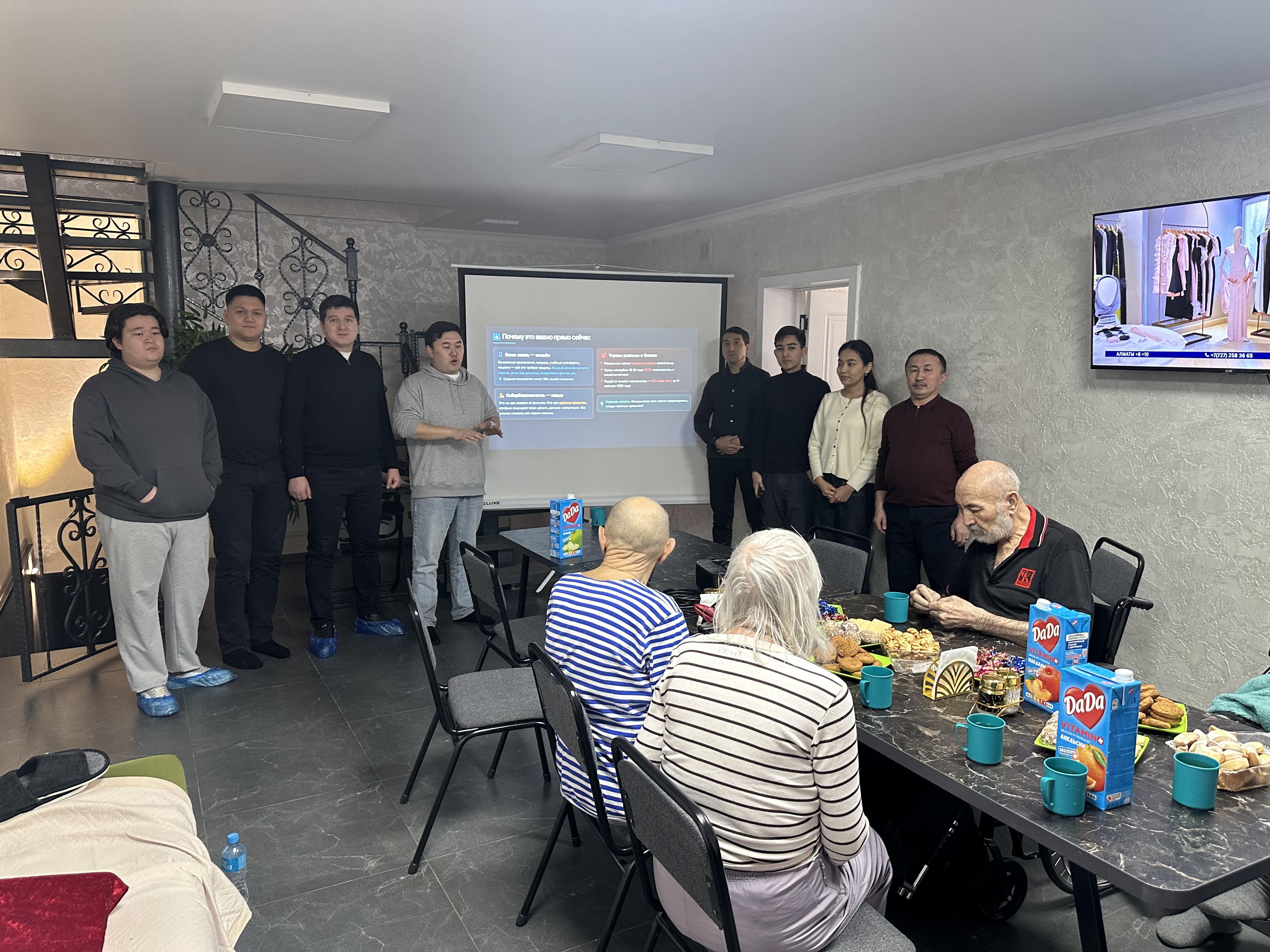
On April 27, 2026, doctoral students of the Department of Cybersecurity and Cryptology at al-Farabi Kazakh National University implemented a significant social and educational initiative.
First-year doctoral students from the educational programs "8D06301 – Information Security Systems" and "8D06301 – Cryptology," as part of their pedagogical practice, conducted a charitable event at the "Blagodat" nursing home. This initiative was organized within the framework of the first United Nations Sustainable Development Goal — SDG 1: No Poverty. This effort is driven by the fact that in the modern world, access to digital services and the ability to use them are key instruments in reducing social inequality and protecting vulnerable populations.
As part of the event, a specialized educational mini-training titled "Using Digital Services" was organized for the elderly and persons with disabilities. The primary goal of the training was to enhance the digital literacy of participants, protect them from modern cyber threats, and help them master the advantages of technology in their daily lives.
During the training, the doctoral students focused on the following key areas:
– protection against Internet Fraud: Participants were given detailed explanations on how to recognize phishing messages, rules for information hygiene, and protocols for handling suspicious phone calls.
– government and Social Services: Safe ways to use the eGov Mobile, Damumed, and online banking applications were demonstrated, along with methods for accessing electronic services remotely.
– configuring Accessibility Features: Smartphone "accessibility" functions (text-to-speech, screen magnification, contrast adjustment) were individually configured to meet the specific needs of each participant for more comfortable use of their devices.
The training was held in an active, interactive format: participants asked questions regarding their concerns and received practical advice. This meeting served not only as a source of useful information for the elderly and persons with disabilities but also as an example of great spiritual support and care from young scientists.
Such events enhance the social responsibility of young scientists and contribute to reducing the digital divide in society. Direct interaction between doctoral students and the older generation is a vivid manifestation of the continuity of generations. Today, digital literacy is not merely technical knowledge but a public good that enables every individual to live a safe and fulfilling life.
 |
 |
Other news


